German Crypto Miner
Bitcoin Mining, Bitaxe, Solo Mining, and Miner Projects in Practice
German Crypto Miner is a technical hands-on blog about home Bitcoin mining, small ASIC miners, Bitaxe hardware, solo mining, and personal projects around miners, displays, monitoring, 3D printing, and hardware extensions.
This site is not about quick profits, exaggerated return promises, or crypto hype. The focus is on technology, real-world experience, power consumption, hashrate, temperature, web interfaces, personal measurements, and practical projects that make mining easier to understand.
What Is This Site About?
At first glance, Bitcoin mining can seem complicated. Terms like hashrate, difficulty, ASIC, mining pool, or solo mining come up quickly, but they are rarely explained in a clear and practical way.
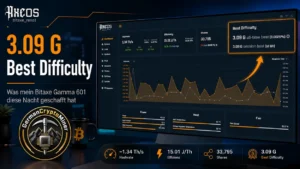
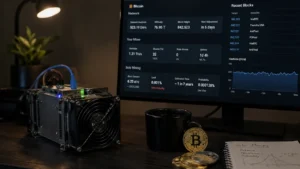
This blog documents the journey into mining with compact devices such as the Bitaxe Gamma 601. It includes personal experience, screenshots, measurements, and clear explanations for anyone who wants to understand the topic from a technical perspective.
In addition, this site covers projects related to mining. These include custom displays for showing miner data, small monitoring solutions, analysis of web interface data, 3D-printed cases and mounts, optimized air guides, power supplies, cooling, status indicators, and other practical extensions for running small miners.
Main Topics
Bitaxe Gamma 601
The Bitaxe Gamma 601 is a small open-source ASIC miner for Bitcoin. This site covers setup, operation, the web interface, temperature, hashrate, power consumption, and practical experience during continuous operation.
Solo Mining
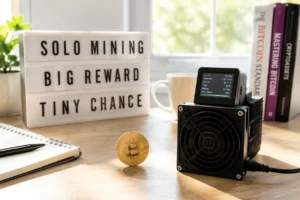
Solo mining is not a predictable source of income. It is more like a technical lottery. Still, it is an interesting way to better understand Bitcoin mining. This site explains why the chance of finding a block is extremely low and what that means in practice.
Miner Projects
In addition to regular blog articles, this site documents personal projects around miners and mining hardware. These include displays for miner data, status indicators, small control and monitoring solutions, web interface evaluations, and practical ideas for everyday operation.
3D printing also plays a role. Cases, mounts, covers, air guides, and small installation aids can help build cleaner miner setups, improve cooling, or integrate miners more clearly into a custom setup.
These kinds of projects are what make the topic interesting. It is not only about getting a miner to run. It is also about making data visible, understanding the technology, and building practical solutions.
Mining Hardware
ASIC chips, power supplies, cooling, cases, firmware, and operational reliability all play an important role in mining. This blog looks at hardware from a technical point of view, not as a marketing promise.
Practice and Measurements
In addition to basic guides, this site will include ongoing practical reports. These cover hashrate, temperature behavior, power consumption, runtime, stability, and observations from real-world operation.
Who Is This Blog For?
German Crypto Miner is for readers who want to understand Bitcoin mining from a technical perspective.
The blog is useful for beginners who want to know what Bitcoin mining actually is.
It is aimed at technology-minded readers who want to better understand small ASIC miners such as Bitaxe.
It is also for hobby miners interested in solo mining, hashrate, mining pools, monitoring, 3D printing, and their own hardware projects.
And it is for anyone who sees mining not as a promise, but as a technical experiment.
No Financial Advice
All content on German Crypto Miner is provided for technical information and personal documentation only. Articles about cryptocurrencies, Bitcoin, mining, prices, electricity costs, or profitability do not constitute financial advice, investment advice, or a recommendation to buy, sell, or operate cryptocurrencies or mining hardware.
Cryptocurrencies are volatile. Mining results, electricity costs, mining difficulty, and hardware prices can change. Anyone making decisions should conduct their own research and consider the relevant risks.
Step by step, this site creates a realistic view of small-scale Bitcoin mining, supported by personal projects, measurements, 3D printing, and practical technical solutions.